
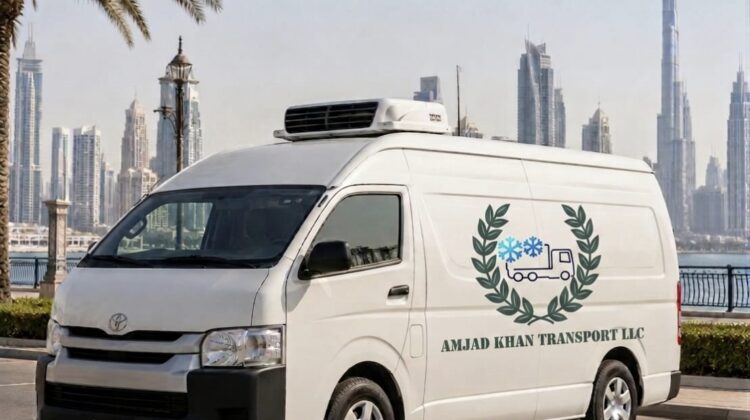
The Best Chiller Van in Dubai:
The Best Chiller Van in Dubai: An Operator’s Honest Buying-vs-Renting Guide
Everyone selling chiller vans will tell you theirs is the best. We run them for a living, so here is the version with the sales pitch removed: what “best” actually means in Dubai’s heat, the real cost of owning one, and the honest point at which buying beats renting.
By the Amjad Khan Transport teamUpdated July 202611 min read
The short version
- There is no single “best” chiller van — only the best one for your load, route and how often you deliver.
- In Dubai’s heat, door-open recovery time and insulation quality matter more than the headline minimum temperature.
- Owning a chiller van costs far more than the sticker price once you add insurance, servicing, depreciation, a driver and downtime.
- Renting wins for most businesses; buying only makes sense when the van runs near full, almost every working day.
- Whether you buy or rent, the same three quality checks apply: certification, pre-cooling discipline, and a temperature record.
What this guide covers
- What “best” actually means for a Dubai chiller van
- The real cost of owning one
- The real cost of renting one
- The honest break-even point
- How to spot a good chiller van
- Chiller van, chiller truck, or freezer van?
- Five expensive mistakes to avoid
If you have searched “best chiller van in Dubai,” you are probably at one of two decision points. Either you are weighing up buying a refrigerated van for your business, or you are trying to work out what a good rental van should look like so you do not overpay for a bad one. This guide is written for both, from the perspective of a company that actually operates these vehicles across the UAE every day — not a dealership trying to move stock.
Here is the uncomfortable truth most articles on this topic avoid: the question “which is the best chiller van” is usually the wrong question. The right one is “should I own or rent, and what spec genuinely matters for my load in this climate.” Get those two right and the specific make of van barely matters. Get them wrong and the best van in the world will still lose you money.
1. What “best” actually means for a Dubai chiller van
Dubai is not a neutral testing ground. From May to September, ambient temperatures regularly sit above 45°C. That single fact reshapes what “best” means, because it stops being about the lowest temperature a unit can reach and starts being about how quickly it recovers after the door opens.
On a multi-stop delivery route, the cargo door opens at every drop. Each time, a wall of hot air rushes into the chilled compartment. A van that can technically reach −5°C but takes ten minutes to pull back down after each opening is worse, on a real route, than one that holds a steady +4°C and recovers in two. Door-open recovery is the spec that actually protects your product, and it is the one almost never printed on a spec sheet.
The features that genuinely separate a good chiller van from a mediocre one in this market:
- Insulation quality. A well-insulated factory body holds temperature with far less strain on the unit. Thin or damaged insulation makes the refrigeration fight the heat continuously, which shortens unit life and raises the risk of drift.
- A reputable refrigeration unit. Units from established manufacturers are worth the premium mainly because parts and service are available fast. A cheaper unit that takes a week to source a part for is not cheaper when your van is off the road.
- Fast door-open recovery. The single most important real-world spec for multi-drop work in the heat.
- Correct size for the load. An oversized van wastes fuel and cooling; an undersized one forces extra trips. The best van is the smallest one that comfortably carries your typical daily load.
- Maintenance history. A serviced average van beats a neglected premium one every time. Refrigeration reliability is about upkeep, not badge.
The best chiller van in Dubai is not a model. It is a well-maintained, correctly-sized van with a reputable unit and fast recovery in the heat — whoever owns it.
2. The real cost of owning a chiller van
This is where most buying decisions go wrong. People compare the purchase price of a van against a rental day rate and conclude that owning must be cheaper over time. But the purchase price is the smallest part of what a chiller van actually costs to run. Here is the honest picture of what ownership involves annually, beyond the vehicle itself:
| Cost component | What it covers | Frequency |
|---|---|---|
| Vehicle purchase | The van and refrigeration unit, new or used | One-off + depreciation |
| Registration & insurance | RTA registration, commercial cargo insurance | Annual |
| Scheduled servicing | Engine, brakes, tyres, general maintenance | Ongoing |
| Refrigeration servicing | Specialist unit maintenance, gas, repairs | Ongoing |
| Driver package | Salary, visa, medical, accommodation | Monthly |
| Leave & sick cover | A second driver, or lost delivery days | As needed |
| Downtime | Revenue lost when the van or unit is out of action | Unpredictable |
| Depreciation | The van loses value every year you own it | Annual |
| Every one of these lines is paid whether the van moves or sits in your yard. | ||
The two costs people forget are depreciation and downtime. Depreciation is invisible until you sell — but a refrigerated van loses real value every year, and that loss is a genuine cost of ownership. Downtime is worse: when your one van breaks down on a delivery morning, you do not just pay for the repair, you lose the delivery, and possibly the customer. With one owned van, a single breakdown has no backup.
None of this makes owning wrong. It makes owning expensive unless you use the van intensively — which is exactly the point of the break-even section below.
3. The real cost of renting a chiller van
Renting inverts the model. Instead of a large fixed cost you pay whether the van moves or not, you pay a rate on the days you actually use it, and someone else carries the ownership burden. Indicative chiller van rental in Dubai starts from around AED 250 per day for a 1 ton van with a driver, with weekly and monthly contracts bringing the effective daily rate down.
What a rental rate typically bundles into that single figure:
- The vehicle and its refrigeration unit
- A trained, UAE-licensed driver (on with-driver hire)
- Fuel and insurance
- Refrigeration servicing and scheduled maintenance
- Breakdown cover — a good provider dispatches a replacement van, not a credit note
- Temperature documentation for the run
The value of renting is not only the money. It is that the risk moves off your books. Depreciation, unit failure, driver leave, breakdown cover — all of it becomes the rental company’s problem to solve, which is why a serious operator keeps spare vehicles ready. You are effectively buying certainty, not just a van.
Not sure which structure fits your route?
Tell us how often you deliver and what you move — we’ll tell you honestly whether daily hire, a monthly contract, or a dedicated van makes the most sense for you.Ask us on WhatsApp
4. The honest break-even point
So when does owning actually beat renting? The answer comes down to one variable that no salesperson wants to dwell on: utilisation. How many days a week, and how fully, would the van genuinely be used?
The rule of thumb
If a chiller van would run near full capacity most working days of the week, ownership can be cheaper over a multi-year horizon — provided you can absorb servicing, cover and downtime. If it would sit idle outside a delivery window, or you deliver only a few days a week, renting almost always leaves more money in the business. The break-even is about usage, not about how long you plan to keep the van.
Work through these questions honestly before you buy:
- Would the van run five to seven days a week, consistently, all year?
- Would it be loaded close to capacity on those days, or half-empty?
- Is your route stable, or might it change as the business shifts?
- Can you cover a breakdown with no backup vehicle?
- Do you have the cash to carry servicing and a driver through a quiet month?
If you answered “no” or “not sure” to more than one of those, renting is very likely the cheaper and safer choice — and you can always revisit the decision once your volume is proven. Many businesses use a dedicated van and driver on a monthly contract as the middle step: the continuity of an owned van, without the capital or the risk.
5. How to spot a good chiller van (rented or bought)
Whether you are inspecting a van to buy or judging a rental, the same checks apply. A clean-looking van tells you nothing about whether it will hold temperature on a 45°C afternoon. These do:
- Is it HACCP-certified? Non-negotiable for food and pharma work, and a signal the operator takes hygiene seriously.
- Is the body pre-cooled before loading? A van cooled after loading has already warmed your product. Good operators pre-cool as standard.
- Do you get a temperature record? If the provider cannot produce a journey log, they cannot prove the cold chain held — and neither can you, to your own auditor.
- What is the door-open recovery like? Ask directly. On a multi-drop route this matters more than the minimum temperature.
- What is included in the price? Driver, fuel, insurance and breakdown cover should be in the rate, not surprise add-ons.
- What happens if the unit fails mid-route? The right answer is “we send a replacement van,” not “we refund the hire.”
6. Chiller van, chiller truck, or freezer van?
“Best chiller van” sometimes turns out to be the wrong vehicle category entirely. A quick way to check you are even shopping for the right thing:
- Chiller van (0°C to +8°C) — fresh produce, dairy, prepared food, bakery, chilled protein, pharmacy. City delivery, last-mile, restaurant supply. This is the default for most Dubai food businesses.
- Freezer van (−18°C or colder) — ice cream, frozen protein, frozen ready-meals. If your product must stay frozen, a chiller van will not do, no matter how good it is. See freezer van rental.
- Chiller truck (3 to 10 ton) — bulk and palletised cold chain, supermarket replenishment, intercity distribution. When a van is simply too small. See refrigerated truck rental.
7. Five expensive mistakes to avoid
- Running frozen product in a chiller van. The most common and most costly error. A chiller van holds +4°C, not −18°C. Ice cream in a chiller van is a ruined load.
- Buying on purchase price alone. Comparing sticker price to a day rate ignores the entire cost of ownership. Always compare fully-loaded annual cost against annual rental.
- Ignoring door-open recovery. Choosing a van on its minimum temperature while ignoring how fast it recovers is optimising the wrong number for real routes.
- No temperature record. If you cannot evidence the cold chain, you cannot defend a disputed delivery or pass a supplier audit. Insist on documentation.
- Owning with no backup. One van and no spare means one breakdown equals one missed delivery day, with no fallback. Renting builds that backup in.
AK
Amjad Khan Transport
Cold chain operators · Musaffah M14, Abu Dhabi · UAE-wide
We operate chiller vans, freezer vans and refrigerated trucks across all seven emirates every day. This guide reflects what we see on real routes in real heat, not a spec sheet. If you want a straight answer on whether to buy or rent for your specific route, ask us — we’ll tell you honestly, even when the answer is “you don’t need us yet.”
Frequently asked questions
What is the best chiller van in Dubai?▾
There is no single best chiller van, only the best van for your load, your route and your delivery frequency. For most Dubai city work a 1 ton factory-insulated van holding 0 to +8°C, fitted with a well-known refrigeration unit and a fast door-open recovery time, is the sweet spot. Larger 2 and 3 ton vans win when volume or drop count grows. What matters far more than the badge on the van is whether the refrigeration is specified for repeated door openings in extreme heat, and whether the vehicle is properly maintained.
Is it better to buy or rent a chiller van in Dubai?▾
Renting wins for the large majority of businesses, and the deciding factor is utilisation. If a van would run near full capacity most days of the week, owning can be cheaper over several years. If it would sit idle outside a delivery window, or you deliver only a few days a week, renting almost always leaves more money in the business once you count registration, insurance, refrigeration servicing, depreciation, driver salary and downtime. The honest rule of thumb is: buy only when the van is genuinely used almost every working day.
How much does it cost to own a chiller van in Dubai?▾
The purchase price is only the start. A realistic annual running cost also includes registration and insurance, scheduled servicing, specialist refrigeration-unit maintenance, tyres and repairs, depreciation, and a driver’s full package of salary, visa and cover. Add the cost of downtime when the van or its refrigeration unit is out of action. These figures vary widely by van, so treat any single number with caution and build your own estimate from your actual usage before deciding to buy.
How much does it cost to rent a chiller van in Dubai?▾
Indicative daily hire starts from around AED 250 for a 1 ton chiller van with a driver, fuel included, though rates vary by provider, van size and duration. Weekly and monthly contracts bring the effective per-day cost down. The rental rate typically bundles the vehicle, driver, fuel, insurance, refrigeration servicing and breakdown cover into one figure, which is what makes it easy to compare against the true, fully-loaded cost of ownership.
What temperature should a chiller van hold?▾
A chiller van holds 0 to +8°C, which is correct for fresh produce, dairy, prepared food, bakery and chilled protein. Anything that must stay frozen, such as ice cream or frozen meat, needs a freezer van running at −18°C or colder. Do not try to run frozen product in a chiller van; it is the single most common and most expensive mistake in cold transport.
What should I check before hiring a chiller van in Dubai?▾
Check that the van is HACCP-certified, that the cargo body is pre-cooled before loading rather than after, and that the provider supplies a temperature record with the run. Ask about door-open recovery time, since that matters far more on a multi-drop route than the headline minimum temperature. Confirm what the rate includes: driver, fuel, insurance and breakdown cover should be in the price, not added later. And ask what happens if the refrigeration fails mid-route — a good provider dispatches a replacement rather than issuing a credit.